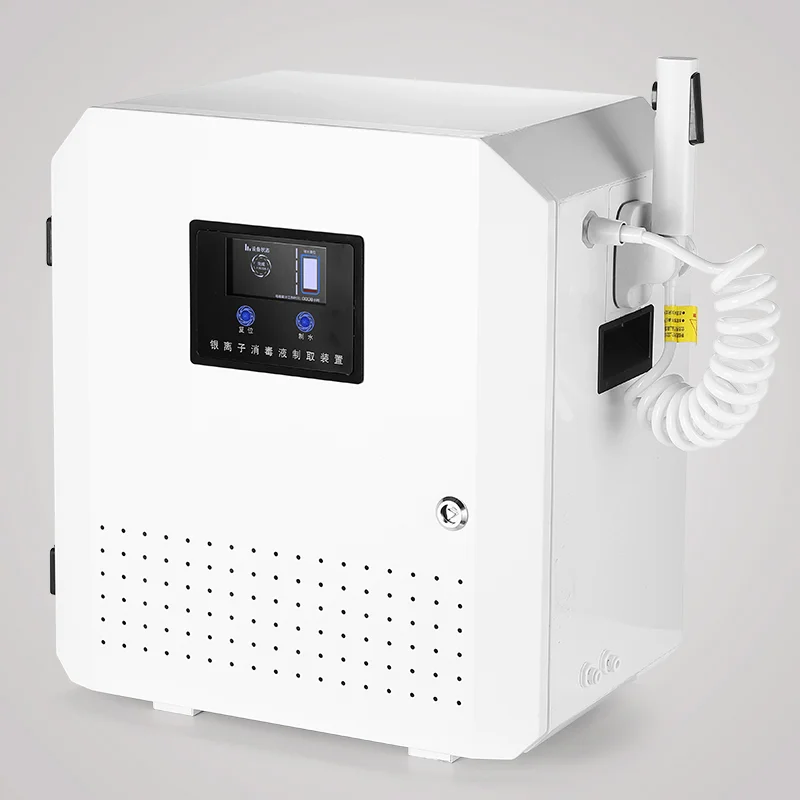
Technical specifications
| Parameter | Published specification |
|---|---|
| Product Name | Automatic Silver Ion Water Generating System |
| Model | YMK-2001 |
| Color | White |
| Dimension | 460*320*520mm |
| Storage Capacity | 10L |
| Material | Iron outer shell;PE water tank |
| Operating voltage | 220V/50Hz; 110V/50Hz |
| Applicable Voltage | 12V/3A |
| Rated Power | 19W |
| Operating Time | 4 Hours |
| Applicable Water Pressure | 0.1-0.4Mpa |
| Consumables | RO membrane;Silver electrodes |
| Water Source | Tap Water |
A connected appliance for a defined cleaning station
YMK-2001 gives a purchasing team a different starting point from a portable cleaning appliance. It connects to a standard cold water line and supplies silver-ion-enriched water to dedicated faucets or outlets. The buying decision therefore includes the installation location, water connection and the way staff will collect the prepared solution.
Kailian owns its factory and manufactures YMK-2001. If you are sourcing a commercial silver ion generator, begin the discussion with the proposed site and operating routine. A clear description of the task helps identify the questions that need answering before equipment is ordered or a location is prepared.
The system is intended for supplementary cleaning and odor control. Consider it as part of a planned cleaning station, with its purpose explained to the people who use that station. Our commercial product range provides a starting point for model selection. For a particular project, review the technical details together with the installation and maintenance questions described below.
RO pre-filtration and silver ion generation
The system combines integrated reverse osmosis pre-filtration with micro-current electrolysis using a pure silver electrode. These are two named parts of the product's technology. The RO membrane and silver electrodes are listed consumables, so both belong in a purchasing discussion about operation and ongoing care.
For a facility buyer, the practical task is to understand the incoming water conditions and the requirements of the proposed installation. Ask which water information the technical team needs, how the system should be commissioned and what operating checks are appropriate for the supplied configuration. The presence of RO pre-filtration should not be treated as a guarantee that every possible water source will suit the equipment.
A distributor can use this distinction when explaining the product: describe the filtration stage, the electrolysis process and the intended cleaning output in a clear sequence. Keep drinking-water treatment claims out of that explanation. Read the silver ion technology overview for context, then confirm any project-specific technical requirements directly with Kailian before selecting the unit.
Match the replenishment cycle to your working day
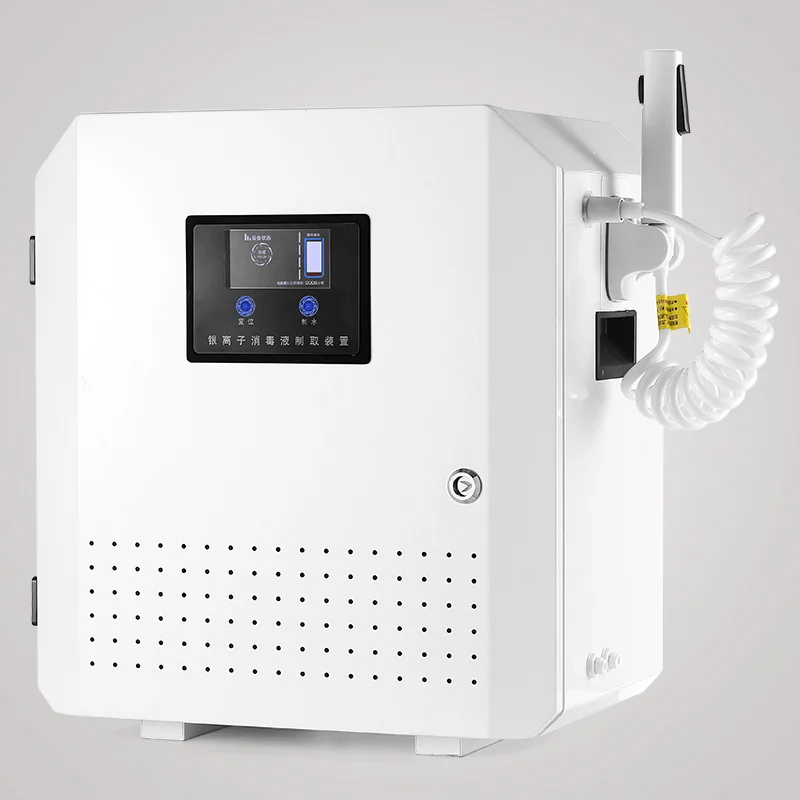
YMK-2001 has a listed storage capacity of 10L. Its documented production logic starts a two-hour replenishment cycle at 50% tank level, or a four-hour cycle when the tank is empty. These details are central to evaluating the model for a location with repeated cleaning tasks.
Start by recording when staff would draw solution and the approximate amount needed at those times. A site with several collection periods close together needs a different discussion from a site where use is spread through the day. Share that pattern with Kailian and ask how it compares with the system's replenishment behavior.
Storage capacity is not the same as an unlimited supply. Avoid converting the tank volume and cycle times into an unsupported daily production guarantee. Your evaluation should include the actual draw pattern, initial preparation and recovery between uses. If a particular minimum availability is essential to the project, state it as a requirement and request a specific assessment. That is a more useful basis for selection than a broad claim of continuous output.
Review the location before installation
The listed enclosure dimensions are 460 by 320 by 520mm. Use them to begin a layout review, then ask about access space, connection positions and service requirements for the supplied version. The footprint alone does not describe every clearance an installer may need.
The applicable water-pressure range is 0.1 to 0.4MPa, and the system is described for connection to a cold water line. Include the available water supply and intended outlet arrangement in your inquiry. Ask the installation team to review the connection plan and any drainage arrangements required by the system before preparing the site.
The published electrical information includes 220V/50Hz and 110V/50Hz entries, alongside a 12V/3A specification. Have Kailian confirm the complete electrical configuration for your destination and proposed order, including the supplied power arrangement. Don't assume the listing means automatic voltage selection. A useful site brief brings the water, electrical and physical-location questions together so the selected configuration can be checked against the same installation plan.
Choose the application, then define the routine
The stated use contexts include offices, restaurants, cafes, salons, gyms and pet-care facilities. Within those settings, the intended role is auxiliary surface cleaning and odor control. A product selection should focus on the particular task: collecting solution for counter wiping, supporting a general cleaning routine or addressing odors in a designated area.
For a cafe or restaurant, discuss the surfaces involved and how the appliance would fit the site's established procedures. Any food-contact application needs a review of the applicable cleaning and rinsing instructions. For a gym, describe the shared surfaces and the times when staff clean them. For a pet-care setting, keep the proposal focused on the environment, such as surrounding surfaces and cleaning areas, rather than treatment of animals.
These examples help frame a project brief; they do not establish a disinfecting effect or universal material compatibility. Identify the actual surfaces, ask for relevant use instructions and evaluate the proposed routine. Our application guide can help you organize those questions before discussing a specific installation.
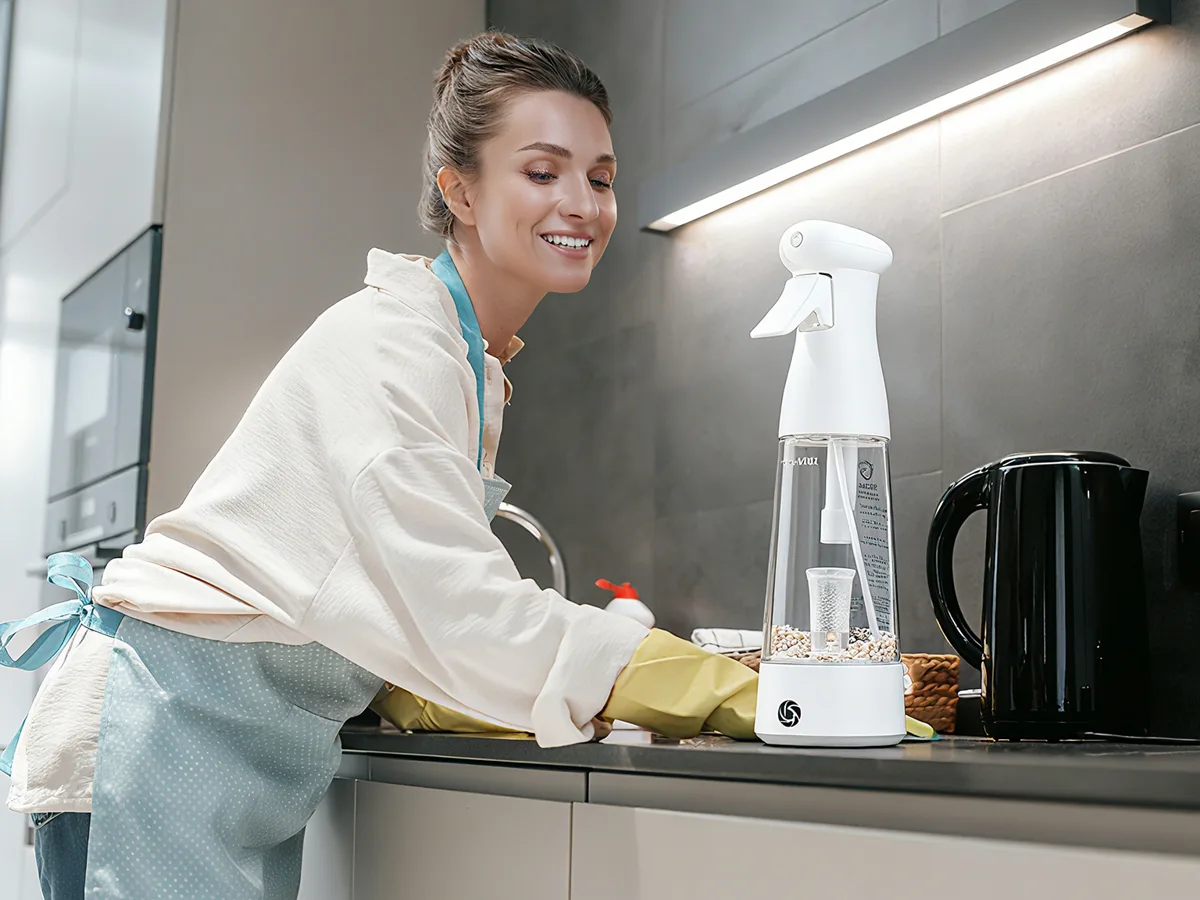
Application illustration; not a verified installation or a claim of disinfection performance.
Make operation clear to the people using the station
YMK-2001 has a display screen and Start and Reset buttons for operation and troubleshooting. For a buyer, that interface is one part of the handover. Staff also need to understand the intended outlet, the production cycle and the procedure to follow when the system needs attention.
Ask for the operating instructions that match the supplied configuration. During a product review, walk through starting the system, understanding its normal status and identifying the information to report if an alert appears. An instruction to press Reset should not replace a review of the cause of a recurring problem or the model's troubleshooting procedure.
For a shared workplace, consider who will take responsibility for routine checks and who will contact the supplier when help is needed. Keep model identification and the agreed support details accessible to that person. You can also review proposed station labels so that users understand the solution's intended cleaning role. A clear handover makes the installation easier to manage without relying on informal explanations passed between shifts.
Include consumables in the purchasing discussion
The RO membrane and silver electrodes are identified as consumables. Before buying, ask how those items are inspected, maintained and replaced for the proposed installation. Confirm the relevant part references and discuss how replacements would be obtained. A purchasing plan should cover the equipment and the practical arrangements for looking after it.
Do not build a service budget around an assumed replacement interval. Ask what factors influence maintenance requirements, what the operator should check and which procedures require qualified assistance. If your organization uses scheduled maintenance records, decide what information should be included for this appliance and who will maintain that record.
The same care is useful when comparing ownership costs. Request the consumable and service information needed for your own calculation, then combine it with your expected use and local operating costs. Avoid relying on a general low-cost claim that has no agreed assumptions. Our quality and documentation guide outlines questions you can bring to a technical review before deciding how the system fits your maintenance arrangements.
Turn customization needs into a reviewable brief
Customization is available for YMK-2001 to address specific client requirements or regional standards. The scope needs to be discussed for each project. Start with the requirement you need to meet and explain why it matters to the installation or destination market.
A useful brief can include the destination, site photographs or a layout, available utilities, intended outlet arrangement and expected usage pattern. If your organization has particular documentation or acceptance requirements, share them before the proposed configuration is finalized. Request confirmation of what is feasible, what the quotation covers and what remains to be agreed.
- Describe the application and the people who will operate the system.
- Identify the site and destination requirements that affect selection.
- List the documents your purchasing or installation team needs.
- State the requested quantity and project schedule for discussion.
Use the customization inquiry page to structure this information. Availability of customization does not mean every change is included, nor does it establish a certification or a guaranteed approval in every market.
Agree what your team will check before ordering
A commercial purchase is easier to assess when the quotation and the evaluation checklist describe the same system. Confirm the model, electrical configuration, included components and intended connection arrangement. Keep any agreed customization in writing so that installation planning and product acceptance use the same reference.
For a site evaluation, consider recording the starting tank condition, collection pattern, observed replenishment behavior and any operating questions. Decide in advance what your team needs to learn. If the project depends on a particular operating requirement, ask how that requirement should be evaluated instead of inferring a result from the storage figure alone.
YMK-2001 is for supplementary cleaning and odor control; it is not a disinfectant, sanitizer or medical device, and the output is not for drinking. Keep those boundaries in the application brief and user information. If a portable appliance better matches the task, review YMK-1001. To discuss this installed system, send Kailian your site and purchasing requirements so the proposed configuration and commercial terms can be considered together.
Buyer questions
Does Kailian manufacture YMK-2001?
Yes. Kailian owns a factory and manufactures YMK-2001. For a project inquiry, include the destination market, site requirements, intended application and quantity. This provides a basis for discussing the configuration, documentation and commercial terms of the proposed order.
Does a 10L tank mean unlimited output?
No. The listed storage capacity is 10L. The documented replenishment logic uses a two-hour cycle at 50% tank level and a four-hour cycle from empty. Share your expected collection pattern so suitability can be discussed against these operating details.
What water connection does the system use?
The system connects to a standard cold water line and supplies silver-ion-enriched water to dedicated faucets or outlets. The listed applicable pressure is 0.1 to 0.4MPa. Confirm the complete connection plan and installation requirements for the supplied configuration before preparing the site.
Which parts need to be included in maintenance planning?
The RO membrane and silver electrodes are listed consumables. Ask for the applicable inspection and replacement instructions, part references and supply arrangements. Confirm maintenance requirements for the intended conditions instead of assuming a fixed replacement period.
Can YMK-2001 be customized?
Customization is available to address specific client requirements or regional standards. Send a clear project brief and request confirmation of the feasible scope, documentation, price and timing. Each proposed change needs review; availability does not imply automatic certification or approval.
Is the generated water for drinking or medical use?
No. YMK-2001 is intended for supplementary cleaning and odor control. Its output is not for drinking, and the appliance is not a medical device or disinfectant. The presence of RO pre-filtration does not change that intended purpose.